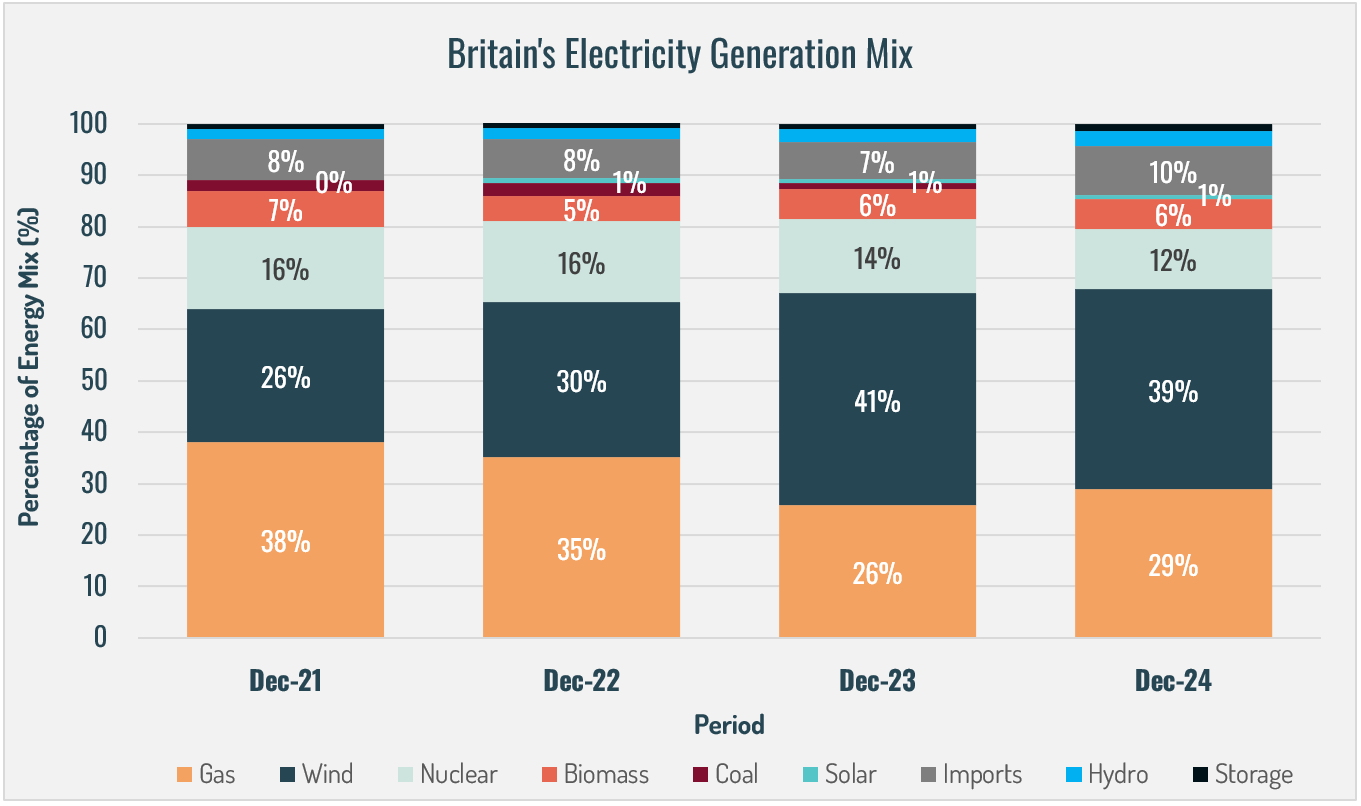
- In December 2024, wind energy accounted for the highest proportion of Britain’s electricity mix among all energy types, contributing 39%. Gas contributed 29%, which was a 3% increase from December 2023. Although wind's contribution was higher than in December 2021 and 2022, it was 2% below the 41% recorded in December 2023.
- Imports reached their highest level for December in the past four years, supplying 10% of Britain’s electricity mix, which is 3% more than in December 2023.
- Contributions from biomass, hydro, solar and storage remained stable compared to December 2023, providing 6%, 3%, 1% and 1%, respectively.
- Nuclear energy saw a 2% decrease in its contributions, delivering 12% of the mix in December 2024, the lowest level for December in the past four years. Coal contributed 0% after its phaseout from Britain's electricity generation in September of the previous year.
- Zero-carbon sources comprised 56% of Britain's electricity generation, marking the second highest level for December in the last four years; however, 4% lower than for December in the previous year. Despite this decline, the rolling 12-month average for zero-carbon sources was 51%, the highest of the last four years.
- The carbon intensity of electricity generation in December 2024 was 126 gCO₂/kWh, representing a 3% increase compared to December of the previous year. However, the rolling 12-month average was 125 gCO₂/kWh, indicating a 17% reduction compared to the previous 12-months and the lowest level in four years, reflecting ongoing decarbonisation efforts.
- Increasing electricity generation from renewable sources is essential for achieving our net-zero goals, ensuring energy security, and reducing reliance on imports.
Monthly Statistics
To view our interactive renewables map,
click here
Data source: National Grid ESO 2024 (https://www.nationalgrideso.com/electricity-explained/electricity-and-me/great-britains-monthly-electricity-stats)